|
Ecology
The habitat of limpet is considered as harsh and disturbed conditions. The ecosystem of rocky shores is greatly affected by the extreme natural forces from north-east Gold Coast Seaway and the Pacific Ocean. All vegetation and non-vegetated marine wildlife not only require to endure the physical challenges against the strong winds and waves, but also handle chemical stress from highly exposure of UV, salinity and nutrient deficiency in sandy sediments.
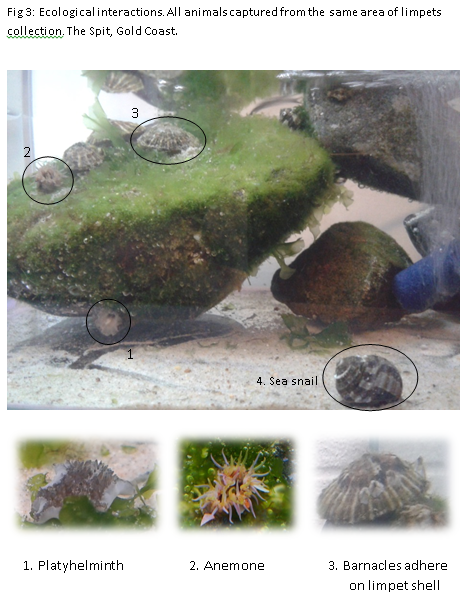
On the other hand, the hydrological movement in water provides regulate and stabilise inshore sediment which fundamentally support vegetation developments and binding of sandy particles. Some biological compositions remained existed in the ecosystem as performing important shade, roosting and nursery process for marine life. The habitat niche for common fauna and flora include seaweed, snail, barnacles, marine flatworms and anemones (Fig 3).
|